That’s the thing about Shane Jones of Mangonui, he may very well have inherited his Dalmatian tupuna’s (ancestor) productive fecundity. His tupuna Andre Kleskovic and wife had 16 kids, Shane and Ngareta have 7. So when Jones says in response to watching those adult videos that he’s a red blooded male, yeah!.......it’s in his whakapapa.
That whole porn debacle is history, so-last-year, maybe not totally forgotten, but definitely forgiven by his leader Phil Goff. Shane did the right thing man’ed up, fell on his sword, wailed mea culpa and took the media fuelled flak. He scampered to the back benches and waited till the water was muddied by some other errant MP and all eyes were off him.
His self imposed banishment to Coventry paid dividends. He’s in line for one of the Labour big seats up front. He’s taking on Pita Sharples and the Maori Party in Tamakimakaurau. He won’t win. Sharples has done too much leg work in the area, not just during his time as a politician but his work with Kohanga Reo and Maori education has cemented his mana in the concrete jungles of Auckland. It’ll take a seismic quake to dislodge Sharples.
Taking on the co-leader of the Maori Party means Jones is on track to replacing former Minister of Maori Affairs Parekura Horomia. The hefty fellow might vacate his chair but don’t bet on the son of Ngati Porou ceding the seat of Te Tai Rawhiti. Horomia is no slug when it comes to his East Coast people and make no mistake about it, the tribe that has a whale for an ancestor loves this man. He brushed aside his cousin Derek Fox and the Maori Party in 2008, with little more than a huff and a puff. So if Labour doesn’t want to lose one of the two remaining Maori seats, then they need to hang onto Parekura’s coat tails for dear life.
If Jones takes over the reins as shadow Maori Affairs Minister, he won’t stop there. Jones is ambitious. He’s after the Finance portfolio and why wouldn’t he covet that cache. He’s made for the job. The 51 year old is well schooled in finance and business. He has economics and politics degrees from Auckland and Victoria Universities and he is a Harkness Fellow from Harvard.
He’s revered by both Labour and National Parties for smoothing the troubled waters at the Waitangi Fisheries Commission. Under his Chairmanship back in 2000, Jones succeeded in sorting out the flotsam piled up over years of litigation and battles among tribes and urban Maori. Tribal scrapping over the distribution of some $800 million in fisheries assets was fierce, brutal. Interestingly it was Horomia that put Jones in that lead role.
If Jones is a political pole climber, then what’s to say he won’t make a tilt for the top job? Will Jones be the first Maori Prime Minister? Jones himself detests it when people say he’s Prime Minister in waiting. In his own words, “…that’s to court the guillotine” He points to his mate John Tamihere as an example of what happens when the death knell ‘first Maori Prime Minister’ tolls. Tamihere the West Auckland champion of city Maori is now in purgatory, on talk back radio sharing spit and spittle with his urban brother Willie Jackson.
The thing about Jones is that he is a team person. If he gets the nod at the top job it’ll be because he’s the best person for the position at that time. He won’t do a Chris Carter and hatch a sure-to-fail coup; he won’t even attempt a sure-to-win coup. He’ll come by the job legitimately, because he’s loyal to the leader, his colleagues and his party. He’s pragmatic, practical and a realist. There’s nothing stopping Shane Jones from going all the way. All the way to where though, well that’s up to the Maori-speaking, white, square-head kid from the gumfields of Te Aupouri. So we wait and watch.
Thursday, January 6, 2011

Sunday, December 19, 2010
DIARY OF AN URBAN GARDENER: A STIRLING GARDEN
 I’ve come to the realisation, gardeners and especially ones that till vegetable plots are some of the hardest working and most productive people I know. Bending, raking, digging, pulling, pushing can be back breaking work. Even when
  the plot is in full bloom maintaining these sights is more time consuming and often more expensive than a 20 year old property-tycoon hunting, wannabe-model, sometimes-PR-assistant, celebrity-page stalker. But the pay-off to gardeners is tremendous and multilayered, where as pay back in the latter is usually in damages to pocket and reputation.
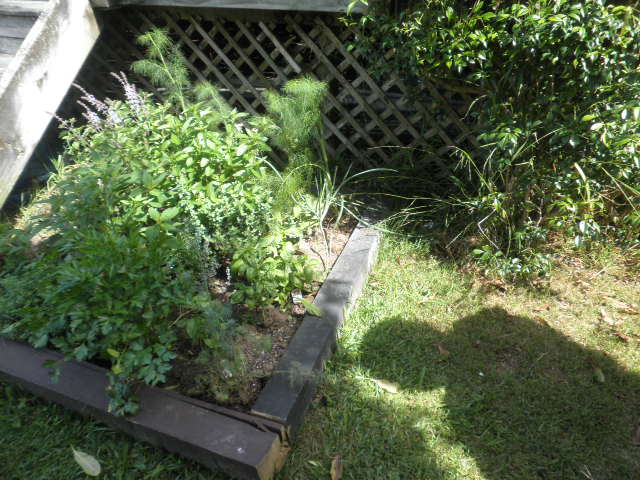
 I have a great mate. Julie Stirling is her name, she is super productive and not a tycoon-hunter, celebrity stalker. She lives in Pt Chevalier and has a tremendous vegetable garden. In fact if Julie and her flatmates were strictly vegetarian of the vegan kind, there would be no need for them to shop for food. Julie has created a self sufficient, self sustaining world. She has the usual suspects, corn, cabbages, radishes, lettuces, strawberries and raspberries. There are also fruit trees, apples, lemons.
This is a good thing because putting food on the table is becoming more difficult for the average household. A few months ago Otago University's school of human nutrition released its annual food costs survey of how much it costs
 to feed a family based on healthy nutritional guidelines. The Otago survey confirms what shoppers already know – it's getting more expensive to buy even the most basic of groceries. In some areas prices have risen by more than half over the past five years with Auckland being the most
 expensive place for a family of four to eat. It costs $274 a week for basic food items, $14 more than it did a year ago for the most basic shop but a staggering $100 more than five years ago. Wellington is the second most expensive city, with basic prices almost on a par with Auckland, while Hamilton is the second-cheapest, with prices being just $2 higher than Christchurch (the cheapest).
The Otago figures do not include non-food items such as personal care and cleaning products, or other household supplies such as rubbish bags and paper towels.
 So Julie is doing herself and flatmates a great financial service. Of course it would have cost them in upfront costs to get started.
  Probably $250 to buy the seedlings, or first plants, a couple of the new fruit trees some implements. So for a little less than an average families weekly spend, Julie’s household can dine on their fare all year round. That’s an incredible saving. There is the labour involved which is intensive or not depending on your gardening-ethics, but in actual money spent versus money saved there is no comparison.
 Julie puts a lot of time and attention into her garden. In return she’s reaped what she’s sowed, including honey.
  The outstanding feature for me was her bee-hive. Buzzing away merrily in the corner was a swarm of honey-bees in what looked like a metal box the size of a small portable smoker. Surrounding it were a myriad of dwarf fruit trees and more vegetable plants. Julie handed me the outcome of the bees hard work. I’m not a great honey eater – too sweet, but this beautifully textured almost toffee like stuff tasted a hint of woody smoke. Amazing that this honey comes from a small Pt Chevalier backyard.
 Each night I watch my friend Julie Stirling’s Facebook postings to see what culinary fare she’s whipping up with produce from her garden. She eats meat so; her garden fare on occasion compliments the main dish. With her herbs I notice Julie tosses into salads and like many keen chefs she also has a knack of turning them into delectable dressings. The mix of salty and bitter herbs Julie mixed to dress her salad would have brought out the nuttiness of the pesto in her chicken mignon – the dinner she
  served up to her flatmates the other night. Julie will no doubt get some egg-laying chickens next. I look forward to her critique, and to learning all about the feathered creatures because I intend to get some for our little Mt Albert backyard as well.
In the meanwhile Julie gave me some cabbage plants which I’ve planted and look for all intents and purposes doing very well. But the proof is in the growing and eating and I look forward to the eating.
Wednesday, December 15, 2010
DIARY OF A GARDENER: TICKLING THE WATERMELONS
I learnt the most fascinating thing yesterday. I learnt that you and 
 me, humans can assist watermelon plants breed, get pregnant, become fertile, pollinate – whatever the term is in garden lingo. My best friends Brother Brent and his wonderful partner Michelle showed me how by using the male flower to tickle the female stem or bulb can fertilise the plant. So my friends regularly give their plant a helping hand if the female bulbs look a bit barren. Watermelons self-fertilise, with the female flower being pollinated equally well by pollen from a male flower on the
  same or a different plant.
  They’re not strictly hermaphrodite though and unlike worms which are, watermelons need the wind, bees, birds or loving human guardians to transfer the pollen along the same plant or across to a neighbouring one. So I found this titbit of knowledge fascinating because it was so rudimentary in a cycle-of-life, universal inter-connected co-existence kind of way. I suppose the smallness of the deed – the tickling of a bulb to produce substanance to feed not just a small family of four but an extended whanau and friends totalling over 100 (a large well producing plant can bear over 20 watermelons), that’s humanity at grassroots level.
 My two friends Brother Brent and
  Michelle, they’re clever people. They live in Mt Albert the same suburb as me and my little family. That’s not why they’re clever; they’re smart because they can grow food in a tyre. The couple reckon it retains heat especially when the temperature drops and I suppose it’ll be a great deflector of frost in winter almost as good as a glasshouse. They have full, healthy kamokamo and tomatoes packed into that broken truck tyre. As soon as I saw it, it brought back memories of my neighbours the Meads in Galbraith Street. They had blue, green,
  yellow swans made out of discarded car and truck tyres. The Meads planted flowers; pansies, carnations and daffodil bulbs inside the hollowed-out middle. I always thought them ugly. But a tyre with food in it, now that’s a much more attractive sight, practical, principled, purposeful.
I won’t be as ambitious for my garden as Brother Brent and Michelle are with theirs. I can’t be because I’m starting over again after a ten year hiatus. I have to relearn things,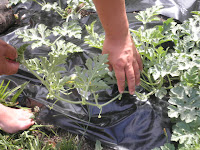 how to grow what to grow when to grow. It’s a whole new relearning. But more than that I’m older and the back isn’t as strong as it used to be and what used to take me an hour seems to take me a day. It was good to visit my friend’s garden. Wonderful to watch Michelle tickle the watermelon bulb, discuss the merits of discarded rubber tyres and to spend time and share food with wonderful people.

 me, humans can assist watermelon plants breed, get pregnant, become fertile, pollinate – whatever the term is in garden lingo. My best friends Brother Brent and his wonderful partner Michelle showed me how by using the male flower to tickle the female stem or bulb can fertilise the plant. So my friends regularly give their plant a helping hand if the female bulbs look a bit barren. Watermelons self-fertilise, with the female flower being pollinated equally well by pollen from a male flower on the
 same or a different plant.
  They’re not strictly hermaphrodite though and unlike worms which are, watermelons need the wind, bees, birds or loving human guardians to transfer the pollen along the same plant or across to a neighbouring one. So I found this titbit of knowledge fascinating because it was so rudimentary in a cycle-of-life, universal inter-connected co-existence kind of way. I suppose the smallness of the deed – the tickling of a bulb to produce substanance to feed not just a small family of four but an extended whanau and friends totalling over 100 (a large well producing plant can bear over 20 watermelons), that’s humanity at grassroots level.
 My two friends Brother Brent and
  Michelle, they’re clever people. They live in Mt Albert the same suburb as me and my little family. That’s not why they’re clever; they’re smart because they can grow food in a tyre. The couple reckon it retains heat especially when the temperature drops and I suppose it’ll be a great deflector of frost in winter almost as good as a glasshouse. They have full, healthy kamokamo and tomatoes packed into that broken truck tyre. As soon as I saw it, it brought back memories of my neighbours the Meads in Galbraith Street. They had blue, green,
  yellow swans made out of discarded car and truck tyres. The Meads planted flowers; pansies, carnations and daffodil bulbs inside the hollowed-out middle. I always thought them ugly. But a tyre with food in it, now that’s a much more attractive sight, practical, principled, purposeful.
I won’t be as ambitious for my garden as Brother Brent and Michelle are with theirs. I can’t be because I’m starting over again after a ten year hiatus. I have to relearn things,
 how to grow what to grow when to grow. It’s a whole new relearning. But more than that I’m older and the back isn’t as strong as it used to be and what used to take me an hour seems to take me a day. It was good to visit my friend’s garden. Wonderful to watch Michelle tickle the watermelon bulb, discuss the merits of discarded rubber tyres and to spend time and share food with wonderful people.
Monday, December 13, 2010
DIARY OF A POLITICAL OBSERVER: OBSERVING MANUREWA
DIARY OF A POLITICAL OBSERVER
Louisa Wall deserved to win Labour’s selection to replace George Hawkins in Manurewa.
The 38 year-old Policy Advisor, former Labour List MP, former Black Ferns, Silver Ferns and I think White Ferns player was voted in by Party members to represent Labour at next year’s general elections. Last weekend’s battle royale was fought over an 8 hours marathon. What a fight she had to put up, and the all-in Party brawl wasn’t of her making either. The selection was an internal Party hierarchy bitch-fight with different factions wheeling and dealing well before the actual vote day.
Testosterone-prone power Union EPMU pitched their brawn behind Jerome Mika, while feminist-driven Service Workers Union backed Louisa Wall. Outgoing MP George Hawkins favoured his Electorate Vice-Chair Ian Dunwoody, while Shane Te Pou would have garnered support from Māori and Amelia Schaaf Tongan quarters.
Current List MP Ashraf Choudhary entered the fracas, no doubt with the support of the Labour caucus. But at the end of selection it was neither the Party nor electorate that won. It was the might of the Unions that won the booty.
You have to feel for the losers. Choudhary, an incumbent MP who lives in South Auckland runs an electorate office 10kms down the road but can’t get selected, speaks volumes on who runs the Party. Choudhary has a tendency to upset by trying to please. He earned the ire of Winston Peters by using the Koran during his swearing in to Parliament in 2002, not that that’s any big deal (upsetting Winnie or hand-laying on the Koran). The Pakistani born MP went on to upset the Muslims by voting in favour of the Civil Union Bill. But flabbergasted everyone else by saying stoning of homosexuals is ok everywhere except here in New Zealand.
Ian Dunwoody a 20 year Party loyalist and campaigner, local community champion and resident found that on the day – and unlike recent local body elections, ‘local’ stands for nothing. Shane Te Pou has a bit of a shady past. The HR Manager was embroiled in the 2007 Bill Liu aka Yong Ming Yan aka Yang Liu aka William Yan citizenship debacle which also involved Shane Jones, former MP Dover Samuels, and disgraced maverick Chris Carter. Barrister Amelia Schaaf is a political unknown of substance on the national stage and that is a concern to all.
Jerome Mika, a highly regarded comrade of Little’s is listed in the EPMU staff list as Lead Organizer. He’s a good friend of Len Brown – so don’t be surprised if he was behind the mobilization of Union members who rallied the South Auckland voters behind the new Auckland Mayor.
Louisa Wall has a long history in running unsuccessful political campaigns. She stood as a list candidate at the 1999 election and again in 2002 but her low ranking failed to get her over the line and onto the back benches. In 2005 she stood as Labour's candidate in the very blue seat of Port Waikato (now Hunua) but lost out to Paul Hutchison. She finally made it to the Beehive by default thanks to Ann Hartley’s retirement in 2008. But a few months later it all went awry again when she moved into the Māori seat of Tamakimakaurau and lost to Māori Party co-leader Pita Sharples. It was during the 2008 election that she upset Party leaders by urging constituents to give her their party vote, when in fact Labour were running a two-ticks campaign. Wall’s tūrū-hopping (seat jumping) is an indication of the Party’s disregard towards its Māori candidates rather than her apparent desperation to get to Wellington. She will be the first Māori and first Māori woman to run in a general seat for Labour in its 194 year history. While we applaud that on the other hand that’s a down-right travesty that a socialist-left leaning Party doesn’t recognize the merits of its Māori members. I’ll stand to be corrected (about her being 'first Māori') – but I don’t think I am wrong. Until then I say shame on Labour for leaving it this long.
Wall would have won the Manurewa selection partially on her merits; she would have researched and known intimately the place, the people, the Party. She would have given impassioned speeches that showed the potential of an individual who would work to unite Party factions. Voters at the selection would have seen in her a world champion athlete with an 11 year old never-say-die attitude. Make no mistake about it though, her selection was assisted by the might of the sisterhood of the SWU. Cynics would also say in-house boy-bickering assisted her win.
Wall was the right candidate. The people spoke. She will need to start campaigning now. National's Cam Calder is no sloth. He’s tirelessly hard working and has a savvy campaign and electorate team behind him.
Manurewa is Labour’s seat to lose.
Will the Labour Party factions be able to ditch its differences, hold hands in harmony and get on with the job? My bet, it’ll go the way of Mana in Wellington and the 6,700 majority will be slashed dramatically.
Louisa Wall deserved to win Labour’s selection to replace George Hawkins in Manurewa.
The 38 year-old Policy Advisor, former Labour List MP, former Black Ferns, Silver Ferns and I think White Ferns player was voted in by Party members to represent Labour at next year’s general elections. Last weekend’s battle royale was fought over an 8 hours marathon. What a fight she had to put up, and the all-in Party brawl wasn’t of her making either. The selection was an internal Party hierarchy bitch-fight with different factions wheeling and dealing well before the actual vote day.
Testosterone-prone power Union EPMU pitched their brawn behind Jerome Mika, while feminist-driven Service Workers Union backed Louisa Wall. Outgoing MP George Hawkins favoured his Electorate Vice-Chair Ian Dunwoody, while Shane Te Pou would have garnered support from Māori and Amelia Schaaf Tongan quarters.
Current List MP Ashraf Choudhary entered the fracas, no doubt with the support of the Labour caucus. But at the end of selection it was neither the Party nor electorate that won. It was the might of the Unions that won the booty.
You have to feel for the losers. Choudhary, an incumbent MP who lives in South Auckland runs an electorate office 10kms down the road but can’t get selected, speaks volumes on who runs the Party. Choudhary has a tendency to upset by trying to please. He earned the ire of Winston Peters by using the Koran during his swearing in to Parliament in 2002, not that that’s any big deal (upsetting Winnie or hand-laying on the Koran). The Pakistani born MP went on to upset the Muslims by voting in favour of the Civil Union Bill. But flabbergasted everyone else by saying stoning of homosexuals is ok everywhere except here in New Zealand.
Ian Dunwoody a 20 year Party loyalist and campaigner, local community champion and resident found that on the day – and unlike recent local body elections, ‘local’ stands for nothing. Shane Te Pou has a bit of a shady past. The HR Manager was embroiled in the 2007 Bill Liu aka Yong Ming Yan aka Yang Liu aka William Yan citizenship debacle which also involved Shane Jones, former MP Dover Samuels, and disgraced maverick Chris Carter. Barrister Amelia Schaaf is a political unknown of substance on the national stage and that is a concern to all.
Jerome Mika, a highly regarded comrade of Little’s is listed in the EPMU staff list as Lead Organizer. He’s a good friend of Len Brown – so don’t be surprised if he was behind the mobilization of Union members who rallied the South Auckland voters behind the new Auckland Mayor.
Louisa Wall has a long history in running unsuccessful political campaigns. She stood as a list candidate at the 1999 election and again in 2002 but her low ranking failed to get her over the line and onto the back benches. In 2005 she stood as Labour's candidate in the very blue seat of Port Waikato (now Hunua) but lost out to Paul Hutchison. She finally made it to the Beehive by default thanks to Ann Hartley’s retirement in 2008. But a few months later it all went awry again when she moved into the Māori seat of Tamakimakaurau and lost to Māori Party co-leader Pita Sharples. It was during the 2008 election that she upset Party leaders by urging constituents to give her their party vote, when in fact Labour were running a two-ticks campaign. Wall’s tūrū-hopping (seat jumping) is an indication of the Party’s disregard towards its Māori candidates rather than her apparent desperation to get to Wellington. She will be the first Māori and first Māori woman to run in a general seat for Labour in its 194 year history. While we applaud that on the other hand that’s a down-right travesty that a socialist-left leaning Party doesn’t recognize the merits of its Māori members. I’ll stand to be corrected (about her being 'first Māori') – but I don’t think I am wrong. Until then I say shame on Labour for leaving it this long.
Wall would have won the Manurewa selection partially on her merits; she would have researched and known intimately the place, the people, the Party. She would have given impassioned speeches that showed the potential of an individual who would work to unite Party factions. Voters at the selection would have seen in her a world champion athlete with an 11 year old never-say-die attitude. Make no mistake about it though, her selection was assisted by the might of the sisterhood of the SWU. Cynics would also say in-house boy-bickering assisted her win.
Wall was the right candidate. The people spoke. She will need to start campaigning now. National's Cam Calder is no sloth. He’s tirelessly hard working and has a savvy campaign and electorate team behind him.
Manurewa is Labour’s seat to lose.
Will the Labour Party factions be able to ditch its differences, hold hands in harmony and get on with the job? My bet, it’ll go the way of Mana in Wellington and the 6,700 majority will be slashed dramatically.
Thursday, December 9, 2010
DIARY OF AN URBAN GARDENER
 Today I decided to go meet the neighbours and take a look at their gardens. My little family and I are new to the neighbourhood and I thought it would be a great way to meet people.
  So my little 2 year old and I toddled up the road to find ourselves a vegetable garden or two to examine, photograph and hopefully meet the owners. I didn’t need to go far. Almost directly across the road, I saw a family sitting on the doorstep watching an elderly gentleman tending a large relatively newly planted vegetable garden. Up the path we went. It turned out that Falakiko Kaitapu, his wife Sita and family are from Ha’apai in Tonga. They have been in New Zealand for about 10 years. Ha’apai is actually a group of coral islands - 62 in all. 45 are uninhabited and almost all are low coral islands with vibrant reefs and kilometres of deserted coconut tree framed white beaches. Your classic South Seas paradise postcard picture, it’s stunning. I grew up in Tonga and know Ha’apai. So when I heard that the Kaitapu family came from that group of Islands I thought what a huge social and cultural sacrifice they’ve made to be here in Aotearoa New Zealand.
 There’s just over 50,000 Tongans in New Zealand but in terms of Tongan immigrants, the Kaitapu family at 10years are new comers to the country. Tongans have been voyaging to Aotearoa for more than 100 years, but it wasn’t really until the 1950’s and 60’s that significant numbers started arriving. The notorious ‘dawn raids’ of the 1970’s saw the rise of the Polynesian Panthers and Tongan urban leader Will Illolahia. Today Will and his Waiata Trust are behind the Owairaka Community Garden initiative. Will established the garden to bring warring teen gangs together. In January 2002, two Somali youths were charged with murdering a 21-year-old Tongan, Elikena Inia, in a night of brawls between Somalis and Pacific Islanders in
 near-by McGehan Close. The garden is still being maintained by Will, Waiata Trust and local youth. I’m not surprised Will chose a garden as the mediary for peace. Nor am I surprised that Mr Kaitapu has such a magnificent vegetable garden. All Tongans back in the Islands have a family plantation. So both Will and Mr Kaitapu are working with and on, what they know.
The main staple of a Pacific Island vegetable garden is taro. Mr Kaitapu’s garden is no exception. He also has banana trees and something I haven’t seen in a domestic garden since I was in Tonga and that’s peanuts. Looking
 forward to seeing how they nut out! There were also tomatoes, silver beet and cabbages. His garden is on an incline, ideally placed to maximise all day sun. What amazed me was that Mr Kaitapu
  didn’t use any fertiliser. None at all. All he does is tend to the plants himself weeding and turning the soil daily and over a period of hours. A real labour of love.
Meanwhile back in my humble garden. I cleared a few centre-metres of leaves and turned the soil, but came to a crashing halt when a rat the size of a cat scuttled past me. I didn’t scream hysterically but rather used a string of profanity, that would make Mike King proud! I know where the rat’s come from. There’s a creek that runs along the back of the houses on our side of the street. Its part of the Oakley Creek, Maori know it as Auaunga Awa. So I’m going to have to lay bait or something. I won’t set a trap that means I’ll have to manually remove it or them if there’s more than one. There’s no humane way to get rid of varmints. But if you do have any other suggestions on extermination methods, other than baiting and trapping, I’d gladly welcome them.
Tuesday, December 7, 2010
DIARY OF AN URBAN GARDENER
I’ve cleared another metre of ground, making way for my urban vegetable garden. It’s slow going for me. Whereas some gardeners would have cleared the same space in the wink of an eye – unfortunately I’m a cm-x-cm kind of girl. Lucky for me the garden’s relatively clear of weeds, thanks to the heavy leaf cover on the ground. It’s been a well maintained garden over all. This is a new home for me and my little family. We’re living in a three bedroom ex-state house. The house itself has good solid bones, nothing leaky about it except for the taps that don’t twist all the way to off. Unlike other state homes in our street our yard isn’t quite your ¼ acre section (it’s more like an 1/8th), but compared to the homes we’ve owned in Grey Lynn this property feels almost farm-like in its proportions.
When I was a kid growing up in Galbraith Street which is just around the corner from where we live now, it was a true ¼ acre section. My parents bought the state house from the Government using the Family Benefit as a deposit. That was 1960’s Auckland and we were the only Maori family in the street. In fact the closest Maori family to us were the Webbs, cousins of ours from up North. They lived in Potter Ave two streets over. The Webbs and us were part of the Labour Government’s ‘pepper-potting policy’. This is where Maori families were sprinkled around Pakeha neighbourhoods to encourage assimilation into Pakeha society. I suppose we could count ourselves lucky to have been allowed to ‘pepper-the-pot’, because twenty years earlier (the late 1940s) Maori were excluded from mainstream state housing, on the grounds that their presence would 'lower the tone' of state housing communities. At that time there was state assistance for Maori housing in rural areas but it came in the form of loans. The monies were used to replace dilapidated housing. The replacement buildings were smaller and less sophisticated than the state-sponsored Pakeha housing.
Anyway I digress.
It was the size of the sections I wanted to talk about or rather what was on the sections. I can’t find any policy similar to that of Canberra Australia requiring residents to have set number of trees and shrubs on their properties. But back yard Kiwi state houses of that era, all without exception grew the same trees – feijoa, plum, apple, peach, lemon and a loquat. A mini orchard. Galbraith Street still has one of two original plum trees and the feijoa tree. Both are over 50 years old now and still fruiting strongly. Alas the apple, peach and loquat succumbed to my brother’s over exuberance with an axe, 40 years ago. Many of the state homes in my street today have very mature fruit trees, apples, plums, lemons and loquats mainly. You can tell they must have been planted over half a century ago because of the moss covered bark, the gnarled leaves or the general skeletal frames reminiscent of our own frail elderly. As well as fruit trees, state houses from the 40’s to 70’s also had the most magnificent vegetable gardens. It was no surprise to see 10 metre rows of silver beat stand knee and thigh high beside shoulder tapping tomato plants and head topping corn stalks. Potato plants were abundant along with cabbages, beans, peas and beetroot. Lettuces weren’t at all popular, well not in our neighbourhood anyway.
My section won’t be the ‘long rows akin of old’. Instead I think I’ll have boxed sections, it’ll be much more manageable for me. But I better get going otherwise I’ll still be talking about it this time next year.
When I was a kid growing up in Galbraith Street which is just around the corner from where we live now, it was a true ¼ acre section. My parents bought the state house from the Government using the Family Benefit as a deposit. That was 1960’s Auckland and we were the only Maori family in the street. In fact the closest Maori family to us were the Webbs, cousins of ours from up North. They lived in Potter Ave two streets over. The Webbs and us were part of the Labour Government’s ‘pepper-potting policy’. This is where Maori families were sprinkled around Pakeha neighbourhoods to encourage assimilation into Pakeha society. I suppose we could count ourselves lucky to have been allowed to ‘pepper-the-pot’, because twenty years earlier (the late 1940s) Maori were excluded from mainstream state housing, on the grounds that their presence would 'lower the tone' of state housing communities. At that time there was state assistance for Maori housing in rural areas but it came in the form of loans. The monies were used to replace dilapidated housing. The replacement buildings were smaller and less sophisticated than the state-sponsored Pakeha housing.
Anyway I digress.
It was the size of the sections I wanted to talk about or rather what was on the sections. I can’t find any policy similar to that of Canberra Australia requiring residents to have set number of trees and shrubs on their properties. But back yard Kiwi state houses of that era, all without exception grew the same trees – feijoa, plum, apple, peach, lemon and a loquat. A mini orchard. Galbraith Street still has one of two original plum trees and the feijoa tree. Both are over 50 years old now and still fruiting strongly. Alas the apple, peach and loquat succumbed to my brother’s over exuberance with an axe, 40 years ago. Many of the state homes in my street today have very mature fruit trees, apples, plums, lemons and loquats mainly. You can tell they must have been planted over half a century ago because of the moss covered bark, the gnarled leaves or the general skeletal frames reminiscent of our own frail elderly. As well as fruit trees, state houses from the 40’s to 70’s also had the most magnificent vegetable gardens. It was no surprise to see 10 metre rows of silver beat stand knee and thigh high beside shoulder tapping tomato plants and head topping corn stalks. Potato plants were abundant along with cabbages, beans, peas and beetroot. Lettuces weren’t at all popular, well not in our neighbourhood anyway.
My section won’t be the ‘long rows akin of old’. Instead I think I’ll have boxed sections, it’ll be much more manageable for me. But I better get going otherwise I’ll still be talking about it this time next year.
Monday, December 6, 2010
DIARY OF A GARDENER
 I’ve succumbed to a trend weaving its way around inner city urban homesteads – gardening! Not just the flower bed type of gardening but the organic vegetable ecologically biodiversity friendly planet saving, get down with papatuanuku roots- type of gardening.
The thing about city folk and gardening is that there’s a tendency for the urban-dwellers to think they’ve reinvented it into an art form. Of course there’s beauty in the aesthetics, there’s colour texture, form and style, no doubt about it. Go to any townie-farmers’ market like Grey Lynn and that’s where you hear them, chattering on about organic match this, companion mix that, death to pesticides, life to anything with the first three letters E.C.O or B.I.O.
 They’re a funny bunch these city mulches, fervently spreading their organic wisdom over a sprawling metropolis trying to lessen the impact of urban erosion. They’re well meaning if a little naïve. They’re really easy to spot. They’re the ones in tight black gym leggings, clean manicured nails, designer gardening tools bought from Republic, and oh, they don’t grow enough produce of their own to sell and they can’t bake. Instead they peruse the stalls, picking up herbs, feijoa wine organic of course, choko butter organic of course and they talk meaningfully about micro-greens when really they mean broccoli. The city-mulchers, pop free-range eggs into Trelise Cooper biodegradable hessian shopping bags before zooming off in their gas guzzling SUV’s, to have double shot lattes with BFF at upmarket SPQR in Ponsonby. Yes indeed these are the city-mulches, the ones who slum it for an hour on Sunday mornings in Grey Lynn and convince themselves they’re eco-friendly environmentalists. Well I’ve joined them, minus the gym leggings, manicured nails, SUV and designer gardening tools.
 When I say I’ve joined them, I mean I’ve taken to turning over patches of soil in my backyard to get it ready for herbs. I’m really partial to lettuces of all types so they’re a must have. Tomato seeds and punnets are in plentiful supply at all big red sheds, garden centres and markets. While silver beet is compulsory, it’s so easy to grow it’s almost a weed. At this very early planning phase of my gardening career like the city mulches I won’t be producing enough to sell.
In fact those that do peddle their product at farmers’ markets like Grey Lynn are true earth people. Farmers’ markets are for locals who sell to locals. The idea is, by keeping it close to home reduces transport costs and therefore carbon footprints. It’s also about community spirit, sharing ideas on how to grow healthy sustainable environments in an urban setting.
 And it’s all about good nutritious kai. If you can spot a city-mulcher, then it’s just as easy to spy a peddler. They look like their produce - organic. They have dirty-tuffty hair, leathery skin and whether male or female they’re always slim. I have never seen an over weight organic produce supplier. They also look like they’d rather hug a tree than a human. Since I’m making wild generalisations they would be Green Party voters and Labour would be as far right as they could possibly stretch. So just to reiterate, I’m not a peddler and I don’t think in all honesty I will ever be one. But who knows?
 So why the sudden urge to garden? I’ve been meaning to create a vegetable garden for some time now. But time and place has been against me, until now. Now I have the time and I have a very manageable north-east facing backyard that gets all day sun. I’m not a complete stranger to gardening. I’ve maintained a few plots in my earlier years before my television production company consumed my energy. In fact I produced a bumper crop from a Balmoral Auckland backyard that I could very well have proudly taken to market. The plot backed on to our neighbour’s vegetable garden. I’ve long forgotten the blokes name but we’d meet up at least a couple of times a week, he was a scientist at Mt Albert’s DSIR. I never met his wife, he said he had one and he always talked about her but in the two years we gardened together she never appeared. Strange.
My pride and joy were the tomatoes which were to die for.
 They were grown from cuttings given to me by my wonderful Australian friends Bluey and Barbara-Ann Nowell. They were a solid reliable red, juicy like oranges and not too salty or acidic to the taste buds. My apple cucumbers and beetroot were revered by the flatmates. Joanne Marsh our resident chef made sumptuous salads with my crop. The plant I nurtured with love and affection was the parsley. I fell in love with its bitter-sweet fragrance. When I bruised it between my fingers the scent permeated the air and lingered for minutes. Its tickling texture invited constant stroking and when I ate it I became addicted. Of course it was only that one parsley plant from Balmoral that I was obsessed with. Perhaps because it was the first of its type I’d planted. Maybe I was transferring some kind of sexual release onto the poor plant; I was single back then, although a cucumber would have been a better fetish. When the flat broke up, I didn’t think to pull up the plants or take cuttings with me. I returned to the Balmoral house months later with trowel and bucket in hand to take cuttings of the tomato plants and to retrieve my beloved parsley. Alas, my heart sank. The whole plot had been levelled and in its place a shiny new garage. I was also surprised to see the neighbours plot looking neglected and forlorn. Life of a vegetable plant is indeed a short one.
So now I’m in Mt Albert with my little family ready to plant anew. Times have changed; organic is the name of the game. So I’m looking forward to learning new things and trying new produce.
If anyone has any hints for me on how to do it better, bigger and earth friendlier, I’d welcome the feedback.
Subscribe to:
Posts (Atom)