DIARY OF A POLITICAL OBSERVER
Louisa Wall deserved to win Labour’s selection to replace George Hawkins in Manurewa.
The 38 year-old Policy Advisor, former Labour List MP, former Black Ferns, Silver Ferns and I think White Ferns player was voted in by Party members to represent Labour at next year’s general elections. Last weekend’s battle royale was fought over an 8 hours marathon. What a fight she had to put up, and the all-in Party brawl wasn’t of her making either. The selection was an internal Party hierarchy bitch-fight with different factions wheeling and dealing well before the actual vote day.
Testosterone-prone power Union EPMU pitched their brawn behind Jerome Mika, while feminist-driven Service Workers Union backed Louisa Wall. Outgoing MP George Hawkins favoured his Electorate Vice-Chair Ian Dunwoody, while Shane Te Pou would have garnered support from Māori and Amelia Schaaf Tongan quarters.
Current List MP Ashraf Choudhary entered the fracas, no doubt with the support of the Labour caucus. But at the end of selection it was neither the Party nor electorate that won. It was the might of the Unions that won the booty.
You have to feel for the losers. Choudhary, an incumbent MP who lives in South Auckland runs an electorate office 10kms down the road but can’t get selected, speaks volumes on who runs the Party. Choudhary has a tendency to upset by trying to please. He earned the ire of Winston Peters by using the Koran during his swearing in to Parliament in 2002, not that that’s any big deal (upsetting Winnie or hand-laying on the Koran). The Pakistani born MP went on to upset the Muslims by voting in favour of the Civil Union Bill. But flabbergasted everyone else by saying stoning of homosexuals is ok everywhere except here in New Zealand.
Ian Dunwoody a 20 year Party loyalist and campaigner, local community champion and resident found that on the day – and unlike recent local body elections, ‘local’ stands for nothing. Shane Te Pou has a bit of a shady past. The HR Manager was embroiled in the 2007 Bill Liu aka Yong Ming Yan aka Yang Liu aka William Yan citizenship debacle which also involved Shane Jones, former MP Dover Samuels, and disgraced maverick Chris Carter. Barrister Amelia Schaaf is a political unknown of substance on the national stage and that is a concern to all.
Jerome Mika, a highly regarded comrade of Little’s is listed in the EPMU staff list as Lead Organizer. He’s a good friend of Len Brown – so don’t be surprised if he was behind the mobilization of Union members who rallied the South Auckland voters behind the new Auckland Mayor.
Louisa Wall has a long history in running unsuccessful political campaigns. She stood as a list candidate at the 1999 election and again in 2002 but her low ranking failed to get her over the line and onto the back benches. In 2005 she stood as Labour's candidate in the very blue seat of Port Waikato (now Hunua) but lost out to Paul Hutchison. She finally made it to the Beehive by default thanks to Ann Hartley’s retirement in 2008. But a few months later it all went awry again when she moved into the Māori seat of Tamakimakaurau and lost to Māori Party co-leader Pita Sharples. It was during the 2008 election that she upset Party leaders by urging constituents to give her their party vote, when in fact Labour were running a two-ticks campaign. Wall’s tūrū-hopping (seat jumping) is an indication of the Party’s disregard towards its Māori candidates rather than her apparent desperation to get to Wellington. She will be the first Māori and first Māori woman to run in a general seat for Labour in its 194 year history. While we applaud that on the other hand that’s a down-right travesty that a socialist-left leaning Party doesn’t recognize the merits of its Māori members. I’ll stand to be corrected (about her being 'first Māori') – but I don’t think I am wrong. Until then I say shame on Labour for leaving it this long.
Wall would have won the Manurewa selection partially on her merits; she would have researched and known intimately the place, the people, the Party. She would have given impassioned speeches that showed the potential of an individual who would work to unite Party factions. Voters at the selection would have seen in her a world champion athlete with an 11 year old never-say-die attitude. Make no mistake about it though, her selection was assisted by the might of the sisterhood of the SWU. Cynics would also say in-house boy-bickering assisted her win.
Wall was the right candidate. The people spoke. She will need to start campaigning now. National's Cam Calder is no sloth. He’s tirelessly hard working and has a savvy campaign and electorate team behind him.
Manurewa is Labour’s seat to lose.
Will the Labour Party factions be able to ditch its differences, hold hands in harmony and get on with the job? My bet, it’ll go the way of Mana in Wellington and the 6,700 majority will be slashed dramatically.
Monday, December 13, 2010

Thursday, December 9, 2010
DIARY OF AN URBAN GARDENER
 Today I decided to go meet the neighbours and take a look at their gardens. My little family and I are new to the neighbourhood and I thought it would be a great way to meet people.
 So my little 2 year old and I toddled up the road to find ourselves a vegetable garden or two to examine, photograph and hopefully meet the owners. I didn’t need to go far. Almost directly across the road, I saw a family sitting on the doorstep watching an elderly gentleman tending a large relatively newly planted vegetable garden. Up the path we went. It turned out that Falakiko Kaitapu, his wife Sita and family are from Ha’apai in Tonga. They have been in New Zealand for about 10 years. Ha’apai is actually a group of coral islands - 62 in all. 45 are uninhabited and almost all are low coral islands with vibrant reefs and kilometres of deserted coconut tree framed white beaches. Your classic South Seas paradise postcard picture, it’s stunning. I grew up in Tonga and know Ha’apai. So when I heard that the Kaitapu family came from that group of Islands I thought what a huge social and cultural sacrifice they’ve made to be here in Aotearoa New Zealand.
 There’s just over 50,000 Tongans in New Zealand but in terms of Tongan immigrants, the Kaitapu family at 10years are new comers to the country. Tongans have been voyaging to Aotearoa for more than 100 years, but it wasn’t really until the 1950’s and 60’s that significant numbers started arriving. The notorious ‘dawn raids’ of the 1970’s saw the rise of the Polynesian Panthers and Tongan urban leader Will Illolahia. Today Will and his Waiata Trust are behind the Owairaka Community Garden initiative. Will established the garden to bring warring teen gangs together. In January 2002, two Somali youths were charged with murdering a 21-year-old Tongan, Elikena Inia, in a night of brawls between Somalis and Pacific Islanders in
 near-by McGehan Close. The garden is still being maintained by Will, Waiata Trust and local youth. I’m not surprised Will chose a garden as the mediary for peace. Nor am I surprised that Mr Kaitapu has such a magnificent vegetable garden. All Tongans back in the Islands have a family plantation. So both Will and Mr Kaitapu are working with and on, what they know.
The main staple of a Pacific Island vegetable garden is taro. Mr Kaitapu’s garden is no exception. He also has banana trees and something I haven’t seen in a domestic garden since I was in Tonga and that’s peanuts. Looking
 forward to seeing how they nut out! There were also tomatoes, silver beet and cabbages. His garden is on an incline, ideally placed to maximise all day sun. What amazed me was that Mr Kaitapu
 didn’t use any fertiliser. None at all. All he does is tend to the plants himself weeding and turning the soil daily and over a period of hours. A real labour of love.
Meanwhile back in my humble garden. I cleared a few centre-metres of leaves and turned the soil, but came to a crashing halt when a rat the size of a cat scuttled past me. I didn’t scream hysterically but rather used a string of profanity, that would make Mike King proud! I know where the rat’s come from. There’s a creek that runs along the back of the houses on our side of the street. Its part of the Oakley Creek, Maori know it as Auaunga Awa. So I’m going to have to lay bait or something. I won’t set a trap that means I’ll have to manually remove it or them if there’s more than one. There’s no humane way to get rid of varmints. But if you do have any other suggestions on extermination methods, other than baiting and trapping, I’d gladly welcome them.
Tuesday, December 7, 2010
DIARY OF AN URBAN GARDENER
I’ve cleared another metre of ground, making way for my urban vegetable garden. It’s slow going for me. Whereas some gardeners would have cleared the same space in the wink of an eye – unfortunately I’m a cm-x-cm kind of girl. Lucky for me the garden’s relatively clear of weeds, thanks to the heavy leaf cover on the ground. It’s been a well maintained garden over all. This is a new home for me and my little family. We’re living in a three bedroom ex-state house. The house itself has good solid bones, nothing leaky about it except for the taps that don’t twist all the way to off. Unlike other state homes in our street our yard isn’t quite your ¼ acre section (it’s more like an 1/8th), but compared to the homes we’ve owned in Grey Lynn this property feels almost farm-like in its proportions.
When I was a kid growing up in Galbraith Street which is just around the corner from where we live now, it was a true ¼ acre section. My parents bought the state house from the Government using the Family Benefit as a deposit. That was 1960’s Auckland and we were the only Maori family in the street. In fact the closest Maori family to us were the Webbs, cousins of ours from up North. They lived in Potter Ave two streets over. The Webbs and us were part of the Labour Government’s ‘pepper-potting policy’. This is where Maori families were sprinkled around Pakeha neighbourhoods to encourage assimilation into Pakeha society. I suppose we could count ourselves lucky to have been allowed to ‘pepper-the-pot’, because twenty years earlier (the late 1940s) Maori were excluded from mainstream state housing, on the grounds that their presence would 'lower the tone' of state housing communities. At that time there was state assistance for Maori housing in rural areas but it came in the form of loans. The monies were used to replace dilapidated housing. The replacement buildings were smaller and less sophisticated than the state-sponsored Pakeha housing.
Anyway I digress.
It was the size of the sections I wanted to talk about or rather what was on the sections. I can’t find any policy similar to that of Canberra Australia requiring residents to have set number of trees and shrubs on their properties. But back yard Kiwi state houses of that era, all without exception grew the same trees – feijoa, plum, apple, peach, lemon and a loquat. A mini orchard. Galbraith Street still has one of two original plum trees and the feijoa tree. Both are over 50 years old now and still fruiting strongly. Alas the apple, peach and loquat succumbed to my brother’s over exuberance with an axe, 40 years ago. Many of the state homes in my street today have very mature fruit trees, apples, plums, lemons and loquats mainly. You can tell they must have been planted over half a century ago because of the moss covered bark, the gnarled leaves or the general skeletal frames reminiscent of our own frail elderly. As well as fruit trees, state houses from the 40’s to 70’s also had the most magnificent vegetable gardens. It was no surprise to see 10 metre rows of silver beat stand knee and thigh high beside shoulder tapping tomato plants and head topping corn stalks. Potato plants were abundant along with cabbages, beans, peas and beetroot. Lettuces weren’t at all popular, well not in our neighbourhood anyway.
My section won’t be the ‘long rows akin of old’. Instead I think I’ll have boxed sections, it’ll be much more manageable for me. But I better get going otherwise I’ll still be talking about it this time next year.
Monday, December 6, 2010
DIARY OF A GARDENER
 I’ve succumbed to a trend weaving its way around inner city urban homesteads – gardening! Not just the flower bed type of gardening but the organic vegetable ecologically biodiversity friendly planet saving, get down with papatuanuku roots- type of gardening.
The thing about city folk and gardening is that there’s a tendency for the urban-dwellers to think they’ve reinvented it into an art form. Of course there’s beauty in the aesthetics, there’s colour texture, form and style, no doubt about it. Go to any townie-farmers’ market like Grey Lynn and that’s where you hear them, chattering on about organic match this, companion mix that, death to pesticides, life to anything with the first three letters E.C.O or B.I.O.
 They’re a funny bunch these city mulches, fervently spreading their organic wisdom over a sprawling metropolis trying to lessen the impact of urban erosion. They’re well meaning if a little naïve. They’re really easy to spot. They’re the ones in tight black gym leggings, clean manicured nails, designer gardening tools bought from Republic, and oh, they don’t grow enough produce of their own to sell and they can’t bake. Instead they peruse the stalls, picking up herbs, feijoa wine organic of course, choko butter organic of course and they talk meaningfully about micro-greens when really they mean broccoli. The city-mulchers, pop free-range eggs into Trelise Cooper biodegradable hessian shopping bags before zooming off in their gas guzzling SUV’s, to have double shot lattes with BFF at upmarket SPQR in Ponsonby. Yes indeed these are the city-mulches, the ones who slum it for an hour on Sunday mornings in Grey Lynn and convince themselves they’re eco-friendly environmentalists. Well I’ve joined them, minus the gym leggings, manicured nails, SUV and designer gardening tools.
 When I say I’ve joined them, I mean I’ve taken to turning over patches of soil in my backyard to get it ready for herbs. I’m really partial to lettuces of all types so they’re a must have. Tomato seeds and punnets are in plentiful supply at all big red sheds, garden centres and markets. While silver beet is compulsory, it’s so easy to grow it’s almost a weed. At this very early planning phase of my gardening career like the city mulches I won’t be producing enough to sell.
In fact those that do peddle their product at farmers’ markets like Grey Lynn are true earth people. Farmers’ markets are for locals who sell to locals. The idea is, by keeping it close to home reduces transport costs and therefore carbon footprints. It’s also about community spirit, sharing ideas on how to grow healthy sustainable environments in an urban setting.
 And it’s all about good nutritious kai. If you can spot a city-mulcher, then it’s just as easy to spy a peddler. They look like their produce - organic. They have dirty-tuffty hair, leathery skin and whether male or female they’re always slim. I have never seen an over weight organic produce supplier. They also look like they’d rather hug a tree than a human. Since I’m making wild generalisations they would be Green Party voters and Labour would be as far right as they could possibly stretch. So just to reiterate, I’m not a peddler and I don’t think in all honesty I will ever be one. But who knows?
 So why the sudden urge to garden? I’ve been meaning to create a vegetable garden for some time now. But time and place has been against me, until now. Now I have the time and I have a very manageable north-east facing backyard that gets all day sun. I’m not a complete stranger to gardening. I’ve maintained a few plots in my earlier years before my television production company consumed my energy. In fact I produced a bumper crop from a Balmoral Auckland backyard that I could very well have proudly taken to market. The plot backed on to our neighbour’s vegetable garden. I’ve long forgotten the blokes name but we’d meet up at least a couple of times a week, he was a scientist at Mt Albert’s DSIR. I never met his wife, he said he had one and he always talked about her but in the two years we gardened together she never appeared. Strange.
My pride and joy were the tomatoes which were to die for.
 They were grown from cuttings given to me by my wonderful Australian friends Bluey and Barbara-Ann Nowell. They were a solid reliable red, juicy like oranges and not too salty or acidic to the taste buds. My apple cucumbers and beetroot were revered by the flatmates. Joanne Marsh our resident chef made sumptuous salads with my crop. The plant I nurtured with love and affection was the parsley. I fell in love with its bitter-sweet fragrance. When I bruised it between my fingers the scent permeated the air and lingered for minutes. Its tickling texture invited constant stroking and when I ate it I became addicted. Of course it was only that one parsley plant from Balmoral that I was obsessed with. Perhaps because it was the first of its type I’d planted. Maybe I was transferring some kind of sexual release onto the poor plant; I was single back then, although a cucumber would have been a better fetish. When the flat broke up, I didn’t think to pull up the plants or take cuttings with me. I returned to the Balmoral house months later with trowel and bucket in hand to take cuttings of the tomato plants and to retrieve my beloved parsley. Alas, my heart sank. The whole plot had been levelled and in its place a shiny new garage. I was also surprised to see the neighbours plot looking neglected and forlorn. Life of a vegetable plant is indeed a short one.
So now I’m in Mt Albert with my little family ready to plant anew. Times have changed; organic is the name of the game. So I’m looking forward to learning new things and trying new produce.
If anyone has any hints for me on how to do it better, bigger and earth friendlier, I’d welcome the feedback.
Sunday, October 24, 2010
MANA Bi-Election Wellington Hekia Parata
SATURDAY 16 OCTOBER 2010
I helped out my whanaunga Hekia Parata campaign in her electorate of Mana in Porirua Wellington. The bi-election goes to the polls on Saturday 20 November.
What an interesting township. It’s apparently the fourth wealthiest suburb/ward in the country. For those of you who know the area, it takes in the lower socio-economic region of Cannons Creek – a high umemployment, state housing district and yes, that's where we live a high proportion of us, our Maori and Pasifika whanau. This is Porirua east. Is it surprising then that Mana is a left leaning and therefore Labour stronghold? All those aspects, lower socio-economic, blue collar working, Maori-Pasifika whanau are traditionally left-Labour supporters. So why is it then that this is the fourth wealthiest suburb in New Zealand? Not knowing the area at all – I’m figuring there must be pockets of wealthy, moneyed streets, perhaps Pauatahanui and Pukerua Bay.
The bi-election is being held because Labour incumbent Luamanovao Winnie Laban has retired to take up a position at Victoria University. Taking up the red-reins is former TVNZ journalist Kris Faafoi. The Christchurch born Tokelauan is former Chief Press Secretary to the Leader of the Opposition and Chairperson of the Rongotai Pacific Branch of the Labour Party.
I showed up at Hekia’s Mana office with a couple of National Party mates from Auckland and Palmerston and was immediately impressed by the volunteer support. The queue of helpers snaked out the door and onto the footpath. There was a mix of older Pakeha, middle-aged corporate public servant types (you can tell them they maybe casually dressed but they have the tell-tale crease down the jeans). The standout groups and there were two of them, both on the under 25 year side of life. I labelled one of the groups ‘Young Nat’s but they told me they had graduated, to what I don't know because they looked to me too young to be in the 40-below group. The other largish roopu there; were rangatahi Māori. It wasn’t just that there were a significant number of them about a dozen – but my goodness they were tall about 5’6, 5’7 slim young men and women aged about 16,17 all stuffing envelopes. Hekia’s relatives, I bet.
So off I went door knocking down Mungavin Street in Porirua. Heavily state housing area with about 90% Māori and Pasifika whanau. The street is both hilly and flat. The houses on the ridge had the best view back over to Titahi Bay. The houses on the flat are still on their original ¼ acre sections which means the area hasn’t succumbed to Auckland’s population squeeze and the need to infill. What struck me about this street was the amount of apathy locals have towards the bi-election. This is probably the hardest obstacle to tackle for any Politician. Trying to convince people to take control of their future, to have a say in what happens to them, their whanau and kids is difficult. You’re battling in some instances generational lethargy, indifference created by years of welfare dependency, disillusionment, disappointment and yes sheer bloody laziness. What to do about it takes concentrated co-ordinated effort from community agencies the Government and individuals. It’s not to say it isn’t happening already because it is. But ultimately the will to want to progress, be prosperous, be ambitious needs to come from the whanau themselves. My whanaunga Hekia Parata represents ambition, prosperity. Coming from a small rural East Coast town called Ruatoria – it has never been an affluent township. But concentration on furthering her education a determination to develop economically both on a personal and community level has seen Hekia and her immediate whanau in business and now in Parliament. Hekia is a great success story for the people of Mana, Titahi Bay and Porirua. This is what the National Government is all about prosperous, successful New Zealanders including Māori. So if you’re in Mana, go to the polls on Saturday 20 November and vote Hekia Parata National. Just a reminder it’s a vote for the MP only there’s no Party vote in a bi-election.
Sunday, October 10, 2010
DIARY OF A CAMPAIGNER: GO LICK YOUR OWN WOUNDS! IT AINT OVER!
DAY AFTER:
Sunday 10 October 2010
 Well it’s all over bar the screaming and a-shouting! I wasn’t selected for Local Board Owairaka subdivision of Albert-Eden-Roskill. In fact none of my C&R team mates made it over the line. Chris Fletcher won her race and Paul Goldsmith was pipped at the post by City Vision’s Dr Cathy Casey.
Of course I’m disappointed not to have made it over the line – you don’t enter a race to come second or last. I think I did well on the streets, I did a good door knock campaign, I really enjoyed meeting people – if there was anything I would change about that part of the campaigning strategy it would be that I would knock on more doors and I’d probably want to go round a second time. So next time and there will be a next time I’ll give myself more lead-in. Believe me there will be a next time and it won’t be in three years either. Now that I am not on a Local Board, it frees me up to seek nomination for a central government candidacy.
 There’s no need for me to feel compromised by my duty to the Local Board and my determination to get to Wellington. Whether I get a nomination will depend on several very key factors:
a) How hard I campaigned at this Local Board level b) What skills I bring to the Party c) Team-ship; my dedication to the Party and its policies.
Selection will be up to me – how hard I work, how well I can convince the Party that my skill and experience will not only compliment but enhance the Party and although I have ‘Boss’ and ‘Leadership’ roles in my professional life I am also a very good follower. I hope also to convince the Party that I’m actually quite a nice person as well. I'm well conditioned that Party members can take me home to meet the husband/wife/kids and I won’t eat the pot plants and kick the cats. Don’t get me wrong….I said earlier I’m disappointed but age and business ownership has toughened me up I take very few things personally and I always have a contingency plan.
 Should I take defeat personally….hell no. I know what Maori media commentators will say; Pakeha didn’t vote for me because I was Maori…and because suburbia is by and large homophobic they won’t vote for a gay. Well I don’t believe that, I refuse to buy into that paranoia. That’s rubbish.
What I do think is that, it’s harder to run at Local Board Level if you don’t already have a very big profile at the coal face. There is scant to no media coverage given to Local Boards but rather the ‘sexy’ stories are up at Mayor and Councillor level. Which means for those of us who haven’t worked at flax roots it takes a lot more leg work, and you do need to diversify the methods of community contact: door knocking, community hui, telephone canvassing, fund raising events and there’s no substitution for actually working with and for charity and community groups. Those that won in Owairaka were Community people – absolutely they were; there’s no denying it. So when it came time to vote, as much as residents said they wanted change, Owairaka voted conservatively and stayed with those they knew. Because they knew these people the community felt they could trust them. I can understand that. It had nothing to do with ‘Left’ and ‘Right’ but everything to do with ‘Local’. The Super City is after all an unknown quantity. All communities are concerned and rightly so, about how they will fare. Will they be overlooked in the transitioning phase? Will they be bossed around by the CCO’s? Will their rates and rents increase? I’m not saying Owairaka chose correctly – they didn’t they should have chosen me. What I need to do is to convince them that they should have voted for me and they can vote for me next year.
 In respect to the big-picture view of the elections, the ‘left’ – particularly the unions and Labour Party faithful worked strategically to get South Aucklanders to vote. They were methodical and meticulous and their efforts paid off. It took organisation and time and a lot of people power, but it worked. How desperate were the ‘left’ to get Len Brown into the job, very desperate. You got to admire the job they did on South and West Auckland. They rallied the people, constantly attended to them, it was almost bully-boy tactics. How desperate were they, very desperate.
So now I go back to my other job. I will not be licking my wounds, I am not battered, or bruised physically or emotionally – that’s for kids! I go back to my day job, armed with my A4 exercise book crammed full of notes on how to run a bigger, smarter, slicker campaign – not in three years time but next year.
Follow me if you like. I’m still going to call the blog ‘Diary of a Campaigner’ and since I work in TV I may as well make it a VBLOG. That’ll be fun. To all of you who supported me with votes and good wishes – mauri ora koutou katoa!
Sunday 10 October 2010

 Well it’s all over bar the screaming and a-shouting! I wasn’t selected for Local Board Owairaka subdivision of Albert-Eden-Roskill. In fact none of my C&R team mates made it over the line. Chris Fletcher won her race and Paul Goldsmith was pipped at the post by City Vision’s Dr Cathy Casey.
Of course I’m disappointed not to have made it over the line – you don’t enter a race to come second or last. I think I did well on the streets, I did a good door knock campaign, I really enjoyed meeting people – if there was anything I would change about that part of the campaigning strategy it would be that I would knock on more doors and I’d probably want to go round a second time. So next time and there will be a next time I’ll give myself more lead-in. Believe me there will be a next time and it won’t be in three years either. Now that I am not on a
 Local Board, it frees me up to seek nomination for a central government candidacy.
 There’s no need for me to feel compromised by my duty to the Local Board and my determination to get to Wellington. Whether I get a nomination will depend on several very key factors:
a) How hard I campaigned at this Local Board level b) What skills I bring to the Party c) Team-ship; my dedication to the Party and its policies.
Selection will be up to me – how hard I work, how well I can convince the Party that my skill and experience will not only compliment but enhance the Party and although I have ‘Boss’ and ‘Leadership’ roles in my professional life I am also a very good follower. I hope also to convince the Party that I’m actually quite a nice person as well. I'm well conditioned that Party members can take me home to meet the husband/wife/kids and I won’t eat the pot plants and kick the cats. Don’t get me wrong….I said earlier I’m disappointed but age and business ownership has toughened me up I take very few things personally and I always have a contingency plan.
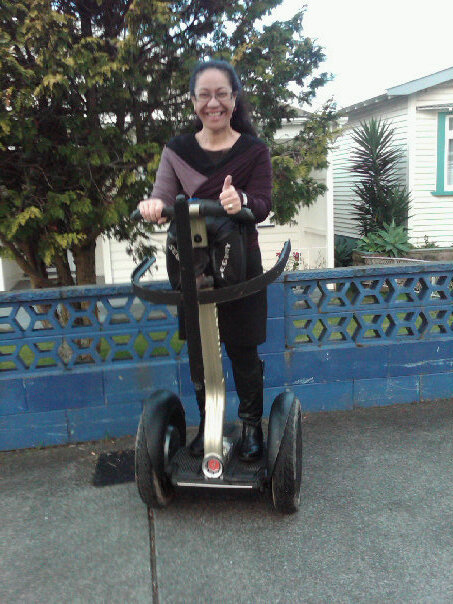 Should I take defeat personally….hell no. I know what Maori media commentators will say; Pakeha didn’t vote for me because I was Maori…and because suburbia is by and large homophobic they won’t vote for a gay. Well I don’t believe that, I refuse to buy into that paranoia. That’s rubbish.
What I do think is that, it’s harder to run at Local Board Level
 if you don’t already have a very big profile at the coal face. There is scant to no media coverage given to Local Boards but rather the ‘sexy’ stories are up at Mayor and Councillor level. Which means for those of us who haven’t worked at flax roots it takes a lot more leg work, and you do need to diversify the methods of community contact: door knocking, community hui, telephone canvassing, fund raising events and there’s no substitution for actually working with and for charity and community groups. Those that won in Owairaka were Community people – absolutely they were; there’s no denying it. So when it came time to vote, as much as residents said they wanted change, Owairaka voted conservatively and stayed with those they knew. Because they knew these people the community felt they could trust them. I can understand that. It had nothing to do with ‘Left’ and ‘Right’ but everything to do with ‘Local’. The Super City is after all an unknown quantity. All communities are concerned and rightly so, about how they will fare. Will they be overlooked in the transitioning phase? Will they be bossed around by the CCO’s? Will their rates and rents increase? I’m not saying Owairaka chose correctly – they didn’t they should have chosen me. What I need to do is to convince them that they should have voted for me and they can vote for me next year.
 In respect to the big-picture view of the elections, the ‘left’ – particularly the unions and Labour Party faithful worked strategically to get South Aucklanders to vote. They were methodical and meticulous and their efforts paid off. It took organisation and time and a lot of people power, but it worked. How desperate were the ‘left’ to get Len Brown into the job, very desperate. You got to admire the job they did on South and West Auckland. They rallied the people, constantly attended to them, it was almost bully-boy tactics. How desperate were they, very desperate.
So now I go back to my other job. I will not be licking my wounds,
 I am not battered, or bruised physically or emotionally – that’s for kids! I go back to my day job, armed with my A4 exercise book crammed full of notes on how to run a bigger, smarter, slicker campaign – not in three years time but next year.
Follow me if you like. I’m still going to call the blog ‘Diary of a Campaigner’ and since I work in TV I may as well make it a VBLOG. That’ll be fun. To all of you who supported me with votes and good wishes – mauri ora koutou katoa!
Thursday, October 7, 2010
DIARY OF A CAMPAIGNER: MAORI MOANERS
DAY FORTY-EIGHT:
Thursday 07 October 2010
Have you voted? It’s not too late to get your forms in – take them to any Council today or tomorrow Friday and to any public Library on Saturday before midday. The preliminary results of the Council for the new Auckland will be known by 1pm on Saturday 09th October.
It’s a time of reflection for me on how I campaigned. This is the first time I’ve actually run for a political position. Make no mistake about it Local Board is all about politics. I only bring this up because I had on the campaign trail been told that Local Board members aren’t real politicians – we’re ‘different’. By ‘different’ I think the person meant we’re at the coal face of the community and that we are the community. I agree with this premise – we are the community. But we have a responsibility to ensure that we positively exploit every policy, budget, legislation, Act and bureaucratic mechanism to advantage our communities. That entrenches us firmly in politics and makes us politicians. You can’t deny what you are by ignoring the facts and calling yourself another name – a rose is still a rose by any other name says Shakespeare.

As a current affairs journalist and programme producer I’ve covered many local body elections – essentially to critique and scrutinize candidate’s policies and promises and to analyse their campaigning strategies.
Working in Maori media and covering local body elections the tone and tenor of coverage is always one of cynicism, and derision not of any person but of a system that some Maori believe to be racist. A system they say does not allow for Maori to vocalise and champion Maori topics. A system these critics say does not allow Maori to be themselves. I do not agree with these cynics. I think these types of commentators perpetuate the very ideology they say they’re fighting against.
 By continuously bleating that Maori issues are ignored and over-looked creates a perception of separatism. By publicizing that Iwi can’t be ‘themselves’ on a campaign trail undermines the strength of Maori as individuals and collectively. For too long now we have listened to naysayer Maori, cynical Maori bemoan our position in this country as less than equal. For too long now Maori have followed these commentators and championed them as leaders. For too long now the dissemination of this type of almost conspiratorial ideology has contributed to a repressive world view.
Don’t get me wrong, there are very real historical injustices that still need to be addressed. Maori have faced systemic racism. Some Maori have and still do face personal workplace and street level racism. Maori do make up the majority of those at the bottom of the economic and social ladder.
 Don’t get me wrong I do think vocalising injustices and often reminds us to continuously seek level playing fields and to seek justice. But to relentlessly complain without offering solutions is wrong. To demand redress for historical injustices without consideration to the long term affect on individuals and communities is irresponsible. To bleat incessantly about other people’s racist viewpoints toward Maori for publicity is in itself inciting hatred.

What I learnt on the campaign trail was humility. Past all the politicking and racial rhetoric was a community called Owairaka made up of Maori, Pakeha, Asian, African, European, Pasifika determined to live a life of prosperity. A community of people focussed on contributing positively to each other in some way. I met Mums and Dads working hard to give their children a better education than they had and greater opportunities to express their potential.
 Owairaka like Maori do not need a constant barrage of cynical oppressive racially divisive diatribe. Nor do we need negative social statistics constantly reinforced as a permanent state of being. What we all desire are advocates of ambition, promoters of a hard work ethic, supporters of self responsibility and community champions.
 Good luck to all those running for Council positions around the country, well done for standing up and wanting to make a difference.
Thursday 07 October 2010
Have you voted? It’s not too late to get your forms in – take them to any Council today or tomorrow Friday and to any public Library on Saturday before midday. The preliminary results of the Council for the new Auckland will be known by 1pm on Saturday 09th October.
It’s a time of reflection for me on how I campaigned. This is the first time I’ve actually run for a
 political position. Make no mistake about it Local Board is all about politics. I only bring this up because I had on the campaign trail been told that Local Board members aren’t real politicians – we’re ‘different’. By ‘different’ I think the person meant we’re at the coal face of the community and that we are the community. I agree with this premise – we are the community. But we have a responsibility to ensure that we positively exploit every policy, budget, legislation, Act and bureaucratic mechanism to advantage our communities. That entrenches us firmly in politics and makes us politicians. You can’t deny what you are by ignoring the facts and calling yourself another name – a rose is still a rose by any other name says Shakespeare.

As a current affairs journalist and programme producer I’ve covered many local body elections – essentially to critique and scrutinize candidate’s policies and promises and to analyse their campaigning strategies.
Working in Maori media and covering local body elections the tone and tenor of coverage is always one of cynicism, and derision not of any person but of a system that some Maori believe to be racist. A system they say does not allow for Maori to vocalise and champion Maori topics. A system these critics say does not allow Maori to be themselves. I do not agree with these cynics. I think these types of commentators perpetuate the very ideology they say they’re fighting against.
 By continuously bleating that Maori issues are ignored and over-looked creates a perception of separatism. By publicizing that Iwi can’t be ‘themselves’ on a campaign trail undermines the strength of Maori as individuals and collectively. For too long now we have listened to naysayer Maori, cynical Maori bemoan our position in this country as less than equal. For too long now Maori have followed these commentators and championed them as leaders. For too long now the dissemination of this type of almost conspiratorial ideology has contributed to a repressive world view.
Don’t get me wrong, there are very real historical injustices that still need to be addressed. Maori have faced systemic racism. Some Maori have and still do face personal workplace and street level racism. Maori do make up the majority of those at the bottom of the economic and social ladder.
 Don’t get me wrong I do think vocalising injustices and often reminds us to continuously seek level playing fields and to seek justice. But to relentlessly complain without offering solutions is wrong. To demand redress for historical injustices without consideration to the long term affect on individuals and communities is irresponsible. To bleat incessantly about other people’s racist viewpoints toward Maori for publicity is in itself inciting hatred.

What I learnt on the campaign trail was humility. Past all the politicking and racial rhetoric was a community called Owairaka made up of Maori, Pakeha, Asian, African, European, Pasifika determined to live a life of prosperity. A community of people focussed on contributing positively to each other in some way. I met Mums and Dads working hard to give their children a better education than they had and greater opportunities to express their potential.
 Owairaka like Maori do not need a constant barrage of cynical oppressive racially divisive diatribe. Nor do we need negative social statistics constantly reinforced as a permanent state of being. What we all desire are advocates of ambition, promoters of a hard work ethic, supporters of self responsibility and community champions.
 Good luck to all those running for Council positions around the country, well done for standing up and wanting to make a difference.
Subscribe to:
Posts (Atom)